



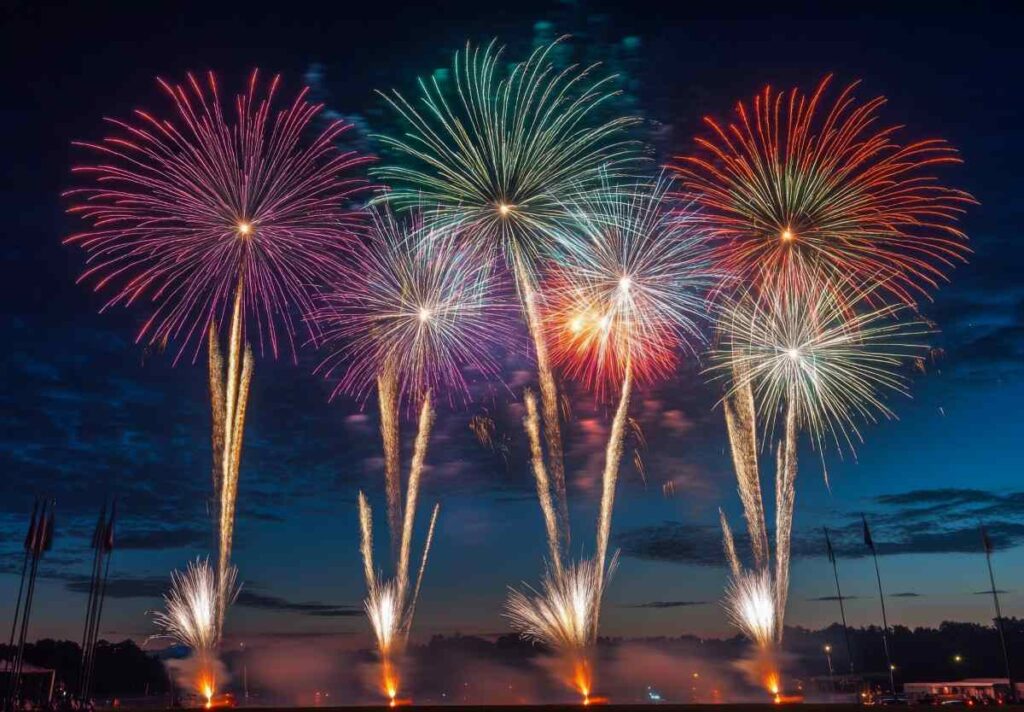
Fireworks can transform the night sky into a spectacular display of glowing stars, shimmering rings, colourful hearts and even smiley faces. Although the finished effect looks almost magical, every shape comes from careful design, precise positioning and the chemistry inside each firework.
Have you ever wondered how a firework creates a perfect circle rather than an ordinary burst of light? Or how some displays produce recognisable patterns that seem to hang in the sky for several seconds? The answer lies in the arrangement of the stars inside the shell, the timing of the explosions and the way pyrotechnic materials burn.
In this guide, we explore the science and craftsmanship behind firework shapes, from traditional spherical bursts to more unusual designs. Whether you enjoy watching professional displays or planning a celebration in your garden, understanding how these effects work can make every colourful explosion even more impressive.
The Science Behind Firework Shapes
The shape of a firework begins long before the shell reaches the sky. Inside an aerial firework are small, combustible pellets known as stars. These contain materials that produce light, colour and different visual effects when ignited.
A firework’s stars are carefully positioned inside the shell. When the shell bursts, the stars are propelled outwards, creating a pattern that reflects their original arrangement. This is why pyrotechnicians can produce more than random explosions of colour: the design is planned inside the firework itself.
The process involves a combination of chemistry, physics and skilled construction. The chemical composition of each star determines the colour and burning effect, while the placement of the stars influences the shape visible to the audience.
How Are The Stars Arranged Inside A Firework?
The stars are the most important components when creating a recognisable firework shape. Rather than being placed randomly, they can be arranged in specific patterns within the aerial shell.
For example, a pyrotechnician wanting to create a heart-shaped firework may arrange the stars in a heart pattern around a central support or insert. When the bursting charge ignites, the stars move outwards while retaining a similar relative arrangement, producing a heart in the sky.
The same principle can be used for stars, rings, smiley faces and other designs. However, the pattern is not guaranteed to appear perfectly every time. The shell’s orientation, wind conditions and the viewing angle can all affect how clearly the audience sees the intended shape.
The Importance Of The Shell’s Interior
Many shaped fireworks use an internal structure, such as a cardboard insert, to help keep the stars in position. The insert supports the design and helps direct the stars as the shell breaks apart.
The scale of the firework also matters. Larger shells can accommodate more stars and allow greater space for detailed patterns, although creating a recognisable design remains technically challenging. A pattern that looks clear from one direction may appear distorted from another.
How Do Fireworks Create Circles And Rings?
Circular bursts are among the most familiar firework shapes. They are often produced by arranging stars evenly around the inside of a spherical shell.
When the bursting charge ignites, the stars travel outwards in different directions. Because the stars were distributed around the shell, the resulting effect forms a rounded pattern, often resembling a glowing flower or sphere.
A ring-shaped firework requires a more specific arrangement. Instead of filling the entire spherical space, stars are positioned along a ring or circular path. Once ignited, the stars spread outward and create a clearly defined circle.
The appearance can be changed further by using different colours, layered rings or stars that produce trails. This gives pyrotechnicians the ability to create effects that are not only shaped but also textured and dynamic.
How Are Hearts, Stars And Smiley Faces Made?
Some of the most recognisable fireworks use shaped patterns designed inside the shell. Hearts and smiley faces are particularly popular for celebrations because they add a playful or personal touch to a display.
To create these designs, stars are arranged into the required shape before the firework is assembled. When the shell bursts, the stars are pushed away from the centre, enlarging the pattern across the sky.
There is an important limitation, however: aerial shells can rotate unpredictably during their flight. This means the pattern may not always face the audience correctly. Professional displays may use multiple shells at the same time, increasing the chance that at least one will be viewed from the right angle.
Why Letters Are More Difficult
Simple shapes are generally easier to recognise than detailed lettering. A heart or ring can still be identifiable even if some stars spread unevenly, whereas a letter requires more precise spacing and orientation.
Letters and words can be attempted through carefully designed patterns, but the result depends on the shell’s construction, viewing position and the consistency of the burst. This is one reason why large professional displays often combine shaped fireworks with other effects rather than relying exclusively on complex images.
How Do Different Colours Change A Firework’s Appearance?
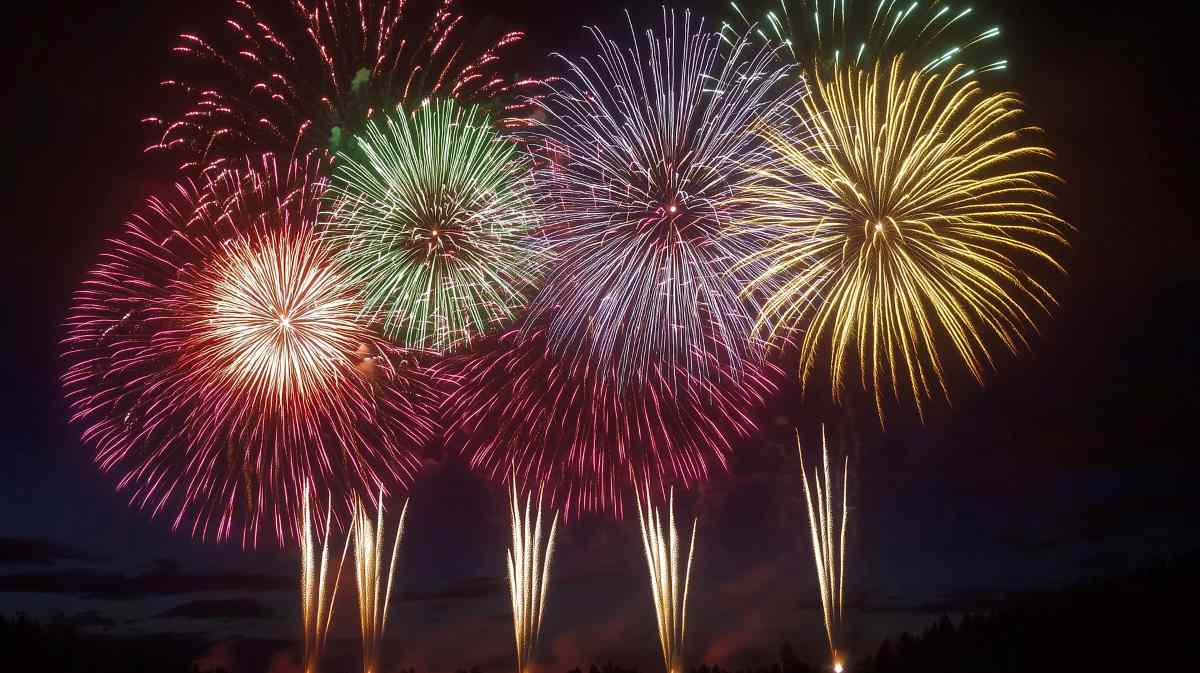
Although star placement creates the shape, chemistry determines the colour and burning behaviour. Firework stars contain fuel, an oxidising agent and compounds that produce specific colours when heated.
Different chemical compounds emit different wavelengths of light. For example, strontium compounds can create red, sodium compounds produce yellow and barium compounds are used for green effects. Copper-based compounds can produce blue, although achieving a vivid blue is particularly difficult because the temperature must be carefully controlled.
Colour can be used to highlight a shape or make separate sections of a firework stand out. A heart might be red, a ring might be gold, or a burst could combine several colours in layers.
Some stars also change colour as they burn. These stars contain different compositions or layers that ignite in sequence, allowing a single trail to transition from one colour to another. Combining colour-changing stars with a carefully planned arrangement can create more complex visual effects.
Why Do Some Fireworks Look Like Flowers Or Palms?
Not every firework is designed to create a recognisable object. Many of the most beautiful effects resemble natural forms, such as flowers, palm trees or willow branches.
A flower-like burst may use stars arranged to create rounded petals, sometimes with a contrasting centre. Palm effects use larger, longer-burning stars that create thick trails extending outwards and then falling downwards.
Willow fireworks are known for their long, drooping trails. The stars are designed to burn for longer, allowing the glowing particles to descend slowly and create the appearance of branches.
These effects demonstrate that firework design involves more than positioning stars. The size, shape, chemical composition and burning duration of each star influence how the finished pattern moves through the sky.
How Do Timing And Height Affect The Shape?
A firework must burst at the correct height to produce the intended visual effect. Aerial fireworks typically use a lifting charge to send the shell upwards, followed by a time-delay fuse that ignites the bursting charge once the shell reaches the appropriate altitude.
The timing of the explosion affects how much space the pattern occupies and how long the audience has to see it. A burst that occurs too low may not spread safely or effectively, while one that is too high may appear smaller from the ground.
Timing also helps create layered displays. Several fireworks can be launched in sequence or at the same time, allowing a show to combine different colours, shapes and effects. Professional display designers carefully coordinate these elements to create variety and rhythm.
Exploring the Different Types Of Firework Effects
Firework shapes are only one part of the experience. The stars can also be designed to produce crackles, glitter, coloured tails, strobes and other effects.
Understanding the different types of firework effects can help you choose products that create a varied and engaging display. For example, a display might combine a large golden burst with colourful peonies, crackling effects and smaller finishing fireworks.
The right combination depends on the available space, the type of event and the atmosphere you want to create. Always check product instructions, safety distances and suitability before using consumer fireworks, and make sure your display complies with UK requirements.
How Anfield Fireworks Can Help Create A Memorable Display
At Anfield Fireworks, we understand that a great display involves more than simply choosing the loudest or brightest firework. A thoughtful selection of colours, effects and timings can help create a memorable experience for birthdays, weddings, Bonfire Night and other celebrations.
Our range provides options for different settings and occasions, allowing you to explore various visual effects while keeping safety and responsible use in mind. If you need guidance when selecting products, speaking to celebration fireworks experts like us can help you make choices that suit your event and available space.
Always use fireworks exactly as directed, maintain the recommended safety distances and never attempt to modify a firework or relight one that has failed to function.
The Artistry Behind Every Firework Shape
The next time you see a heart, flower, ring or golden willow spread across the night sky, remember that the shape begins with a carefully planned design inside the shell. The arrangement of stars, chemical composition, timing and movement all work together to create the finished effect.
Fireworks combine scientific principles with artistic creativity, turning carefully engineered materials into moments that audiences can enjoy. With the right selection and responsible approach, a display can bring colour, atmosphere and excitement to a wide range of celebrations.
Frequently Asked Questions
Can fireworks create any shape I want?
Not necessarily. Simple patterns such as circles and hearts are possible, but complex designs can be difficult to produce clearly. The shell’s construction, orientation and viewing angle all affect the result.
Why do some shaped fireworks appear backwards or sideways?
Aerial shells can rotate while travelling through the air. If the pattern is not facing the audience when the shell bursts, the shape may look distorted or appear as a less recognisable arrangement.
Are all firework shapes made using stars?
Many aerial effects rely on stars, but other components and arrangements contribute to trails, movement, sound and additional visual effects. The design depends on the type of firework being used.
Can a firework change colour while it is in the sky?
Yes. Some stars are designed to burn through different compositions or layers, creating a colour transition as they ignite and continue burning.
Why do some fireworks look like palm trees?
Palm effects use stars that produce longer, thicker trails. Their arrangement and burning characteristics create branches that spread outwards and descend, resembling a palm tree.
Do larger fireworks always create better shapes?
Larger shells can provide more space for stars and detailed designs, but size alone does not guarantee a clearer pattern. Construction, timing, conditions and viewing position all matter.
Can shaped fireworks be used in a garden?
Not all shaped fireworks are suitable for domestic gardens. Check the product category, required safety distance and manufacturer’s instructions, and only use fireworks in an appropriate location with permission.
What makes a professional firework display look so coordinated?
Professional displays combine carefully selected products with planned firing sequences, timing and positioning. This allows different effects to work together and creates a more structured experience for the audience.

