



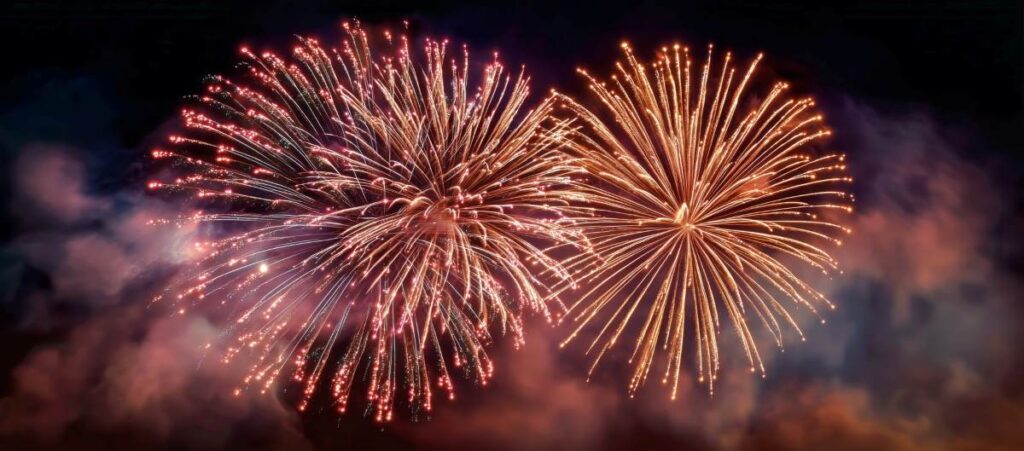
Few things grab attention quite like a firework exploding overhead. Long before we see the vibrant colours spreading across the night sky, we often hear the unmistakable crack, boom, or bang that accompanies it. For many people, that sound is part of the excitement. It adds drama, anticipation, and energy to a fireworks display.
But have you ever wondered why fireworks are so loud in the first place?
The answer lies in a fascinating combination of chemistry, physics, and engineering. Every bang you hear is the result of carefully controlled explosions designed to create both visual and auditory effects. While some fireworks prioritise colour and patterns, others are specifically designed to produce powerful sounds that can be heard over considerable distances.
In this guide, we’ll explore what makes fireworks loud, how different types of fireworks create different sounds, and why those dramatic booms have become such an important part of the fireworks experience.
The Basics: Fireworks Are Controlled Explosions
At their core, fireworks work because of rapid chemical reactions.
When a firework is ignited, a fuel source burns extremely quickly, producing large amounts of gas, heat, and energy. This energy needs somewhere to go, so it expands rapidly outward.
When the expanding gases push against the surrounding air, they create pressure waves. These pressure waves travel through the atmosphere and eventually reach our ears as sound.
The larger and more sudden the release of energy, the louder the resulting noise.
In simple terms, fireworks are loud because they release a huge amount of energy in a very short period of time.
What Actually Creates the Bang?
Many people assume the colourful explosion itself creates the sound, but the reality is slightly more complex.
Inside most aerial fireworks is a component known as a burst charge. This charge ignites once the firework reaches its intended altitude.
- The burst charge serves several purposes:
- Breaking open the firework shell
- Igniting the coloured stars
- Creating visual effects
- Producing the accompanying sound
When the burst charge detonates, it creates a sudden expansion of gases. This rapid expansion compresses the surrounding air and generates a shockwave.
That shockwave is what produces the loud bang we hear from the ground.
Why Some Fireworks Sound Louder Than Others
Not all fireworks are created equally. Some produce gentle crackles or whistles, while others generate deep booms that can be felt in your chest.
Several factors influence how loud a firework sounds:
Size of the Burst Charge
Generally speaking, larger burst charges create louder reports.
A bigger charge contains more energetic material, producing a greater release of gas and pressure when ignited.
This is one reason why larger professional display fireworks often sound much louder than smaller consumer products.
Firework Construction
The design of a firework also plays an important role.
Manufacturers carefully engineer fireworks to achieve specific effects. Some are designed primarily for colour and visual patterns, while others place greater emphasis on sound.
The shape, materials, and internal structure of the shell can all affect the way sound is produced.
Altitude
The height at which a firework explodes influences how we perceive the sound.
Higher bursts may appear larger visually but can sometimes sound quieter because the sound has further to travel before reaching spectators.
Lower aerial effects often seem louder because the sound arrives more directly and with less energy loss.
Atmospheric Conditions
Weather can significantly affect sound transmission.
Factors such as:
- Humidity
- Temperature
- Wind direction
- Cloud cover
can all influence how far and how clearly fireworks can be heard.
On some evenings, fireworks may seem exceptionally loud because atmospheric conditions help carry sound over longer distances.
Different Types of Firework Sounds
One of the reasons fireworks remain so captivating is the variety of sounds they produce.
Different effects are created using different chemical compositions and construction methods.
Booms
The classic deep boom is perhaps the most recognisable fireworks sound.
These are created by powerful burst charges generating large pressure waves.
Large aerial shells often produce the deepest and most dramatic booms.
Cracks
Crackling effects are produced by specially designed compositions that ignite rapidly in multiple small bursts.
These create a series of sharp popping sounds rather than one large explosion.
Whistles
Whistling fireworks use gases escaping through carefully designed openings.
The rushing gas creates vibrations that produce the characteristic high-pitched whistle.
Crackling Tails
Some fireworks leave trails that crackle as they descend through the sky.
These effects add texture and variety to displays, combining visual and auditory excitement.
Why We Enjoy Loud Fireworks

Given how startling fireworks can be, it’s interesting that so many people actively enjoy loud displays.
Part of the answer lies in psychology.
Humans are naturally drawn to dramatic sensory experiences. Loud sounds trigger an emotional response, creating excitement and anticipation.
When combined with bright colours and visual effects, fireworks create a multi-sensory spectacle that captures attention in a unique way.
The loud bang also acts as a form of punctuation within the display, highlighting important moments and creating a sense of scale.
The Difference Between Sound and Perceived Loudness
Interestingly, two fireworks producing the same sound level may not seem equally loud.
Our perception of loudness depends on factors such as:
- Frequency
- Duration
- Pitch
- Environment
Low-frequency booms often feel more powerful because they can be physically felt as vibrations.
Higher-pitched sounds may seem sharper even when measured at lower volumes.
This is why some fireworks feel louder than others despite producing similar sound levels.
How Loud Can Fireworks Be?
Fireworks can reach surprisingly high sound levels.
Consumer fireworks can often exceed 120 decibels at close range, while larger professional display fireworks may produce even higher levels.
For comparison:
- Normal conversation: approximately 60 decibels
- Busy traffic: approximately 80–90 decibels
- Rock concert: approximately 110 decibels
- Large fireworks: 120+ decibels
Fortunately, spectators are normally positioned at safe viewing distances, which significantly reduces exposure to these sound levels.
The Rise of Low-Noise Fireworks
In recent years, low-noise fireworks have become increasingly popular.
These products focus on visual effects while minimising loud reports.
They’re often chosen for:
- Residential areas
- Family events
- Weddings
- Displays near animals
- Community celebrations
Rather than relying on large burst charges, low-noise fireworks emphasise colours, glitter effects, waterfalls, and elegant visual displays.
Their growing popularity demonstrates that fireworks can remain impressive even without extremely loud bangs.
Fireworks and Pets
One of the most common concerns surrounding firework noise involves pets and animals.
Many animals have significantly more sensitive hearing than humans, making fireworks particularly startling.
Pet owners can help reduce stress by:
- Keeping animals indoors during displays
- Closing windows and curtains
- Providing familiar comfort items
- Using background noise to mask firework sounds
Increasing availability of low-noise fireworks also provides additional options for those looking to minimise disruption.
The Science Behind the Boom
For those interested in the technical side, the science behind loud fireworks sounds comes down to the rapid creation and expansion of hot gases.
When the burst charge ignites, gases expand faster than the surrounding air can move out of the way. This creates a sudden increase in pressure that forms a shockwave.
As the shockwave travels through the atmosphere, it gradually weakens. By the time it reaches spectators, it has become the boom or bang we hear during the display.
This process happens incredibly quickly, often within fractions of a second.
Modern Fireworks Design
Today’s fireworks manufacturers have more control over sound effects than ever before.
Advances in pyrotechnic engineering allow designers to create:
- Deep booms
- Sharp reports
- Crackling effects
- Layered sound sequences
- Low-noise alternatives
This flexibility allows displays to be tailored to different audiences and venues.
Anfield Fireworks offer products designed for a wide range of celebrations, allowing you to choose effects that match both your visual preferences and desired noise levels. Discover ready-to-use fireworks sets and display packs now that balance impressive visual effects with carefully selected sound profiles!
Why Sound Remains an Important Part of Fireworks
While the colours often receive the most attention, sound remains one of the defining features of fireworks.
The boom of an aerial shell creates anticipation. The crackle of a finale adds excitement. The combination of sound and light transforms a simple display into a memorable event.
Without sound, fireworks would still be beautiful—but they wouldn’t have quite the same emotional impact.
The noise helps create atmosphere, build excitement, and signal that something special is happening.
More Than Just a Loud Bang
Fireworks are loud because of the rapid release of energy that occurs during carefully controlled explosions. The resulting pressure waves create the booms, cracks, whistles, and pops that have become synonymous with celebrations around the world.
While advances in technology continue to offer quieter alternatives, the dramatic sounds of traditional fireworks remain a major part of their appeal. They contribute to the excitement, create anticipation, and help transform an ordinary evening into something memorable.
The next time you hear a firework boom overhead, you’ll know that behind that brief moment of noise lies a remarkable blend of chemistry, physics, engineering, and centuries of pyrotechnic tradition.

