



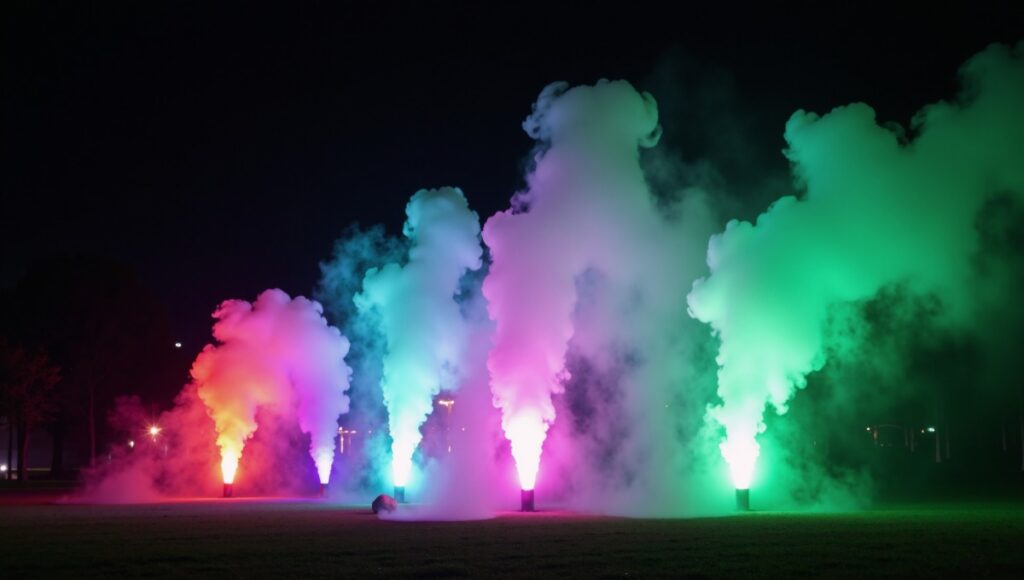
Music videos have always found inventive ways to turn a song into a visual experience. Alongside striking locations, expressive lighting and carefully choreographed movement, coloured smoke offers directors a way to make a scene feel bigger, bolder or more atmospheric. A burst of red behind a performer, a ribbon of blue drifting across an empty landscape or a haze of purple surrounding a dancer can completely change the mood of a shot.
The appeal of smoke bombs in music videos lies in their ability to create movement and colour in real time. Rather than adding every effect in post-production, filmmakers can capture something unpredictable and organic on camera, giving a performance a distinctive visual identity. However, getting the right result involves much more than simply releasing smoke and pressing record.
Why Smoke Effects Have Become a Visual Trend
Music videos compete for attention across streaming platforms and social media, where memorable imagery can help an artist’s work stand out. Coloured smoke provides an immediate visual focal point, making even a relatively simple setting feel cinematic.
Unlike a static backdrop, smoke is constantly changing. It curls around a performer, catches the light and shifts with the wind, creating layers that give a shot depth. A director might use a cloud of colour to frame a singer during a chorus, obscure a transition between scenes or create a sense of movement during an instrumental section.
These effects can also reinforce a video’s creative direction. A moody, minimalist track might be paired with muted surroundings and a single plume of dark smoke, while an energetic pop song could feature contrasting colours and rapid cuts. The effect works best when it contributes to the story or atmosphere rather than appearing as decoration without a purpose.
Professional productions demonstrate how carefully designed smoke effects can communicate an idea. In Artem’s work on the United Nations’ Fight Back campaign, purple smoke represented polluted air in a cityscape, helping turn an environmental issue into a visual element of the narrative. Although the project was a campaign rather than a music video, it illustrates how smoke can carry meaning as well as provide spectacle.
How Directors Use Colour and Timing
Colour influences how audiences interpret a scene. Red might suggest intensity or defiance, blue can create a cooler, more reflective atmosphere, and yellow can bring warmth and energy. These associations are not universal, but they give directors a useful starting point when developing a visual palette.
The choice also depends on the artist’s styling, location and lighting. A bright green plume might look vivid against a dark woodland backdrop but become difficult to distinguish against dense foliage. Pale smoke can work beautifully in strong backlighting, while saturated colours often benefit from a background that provides contrast.
Timing matters just as much as colour. Smoke needs time to spread, and the resulting shape depends on wind, the release point and the surrounding environment. Directors may coordinate its release with a beat drop, a change in choreography or a particular lyric, but the camera operator must be ready to capture the effect before it disperses.
Several techniques can help create a more deliberate result:
- Build towards the effect: Introduce a clean shot before the smoke appears, allowing the colour to make a stronger visual impact.
- Use different shot sizes: A wide shot shows how the smoke interacts with the setting, while closer framing captures texture and movement around the performer.
- Work with the light: Side lighting and backlighting can reveal the shape of a plume that might otherwise look flat.
- Leave room for movement: Allowing smoke to drift naturally can produce a more interesting image than trying to make every frame look identical.
These principles are central to effective coloured smoke video effects. The aim is to make the effect feel connected to the music, not like an interruption to the performance.
Behind the Scenes of a Smoke Bomb Shoot
The finished video may look spontaneous, but the preparation behind a successful smoke shot is usually deliberate. The director, cinematographer, production team and anyone responsible for the special effect need to agree on where the smoke will appear, how the performer will move and what the camera must capture.
A location scout is a sensible starting point. The crew should assess wind direction, available space, background colours, nearby buildings and any restrictions imposed by the landowner or venue. Smoke that looks impressive in an open field may behave very differently in a narrow courtyard, where it can collect around people or obscure exits.
A shot list helps the team work efficiently. Rather than activating several devices at once and hoping for the best, plan which angles, movements and takes are essential. A rehearsal without smoke can establish the performer’s position and camera movement before the effect is introduced. This reduces unnecessary activations and gives the crew a clearer idea of what they need to achieve.
The independent filmmaking project Strictly Visual: Coloured Smoke Bombs Cinematic, published by Blueboard Productions, explores coloured smoke as a visual subject in its own right. It is a useful reminder that even a short, experimental piece can be built around the interaction between colour, landscape and the camera.
Understanding how smoke bombs work also helps creators plan realistically. Different products have different activation methods, durations and operating requirements, so a production should never assume that every smoke bomb produces the same volume or lasts for the same amount of time. Test shots and product instructions should guide the plan.
Safety Considerations on Set
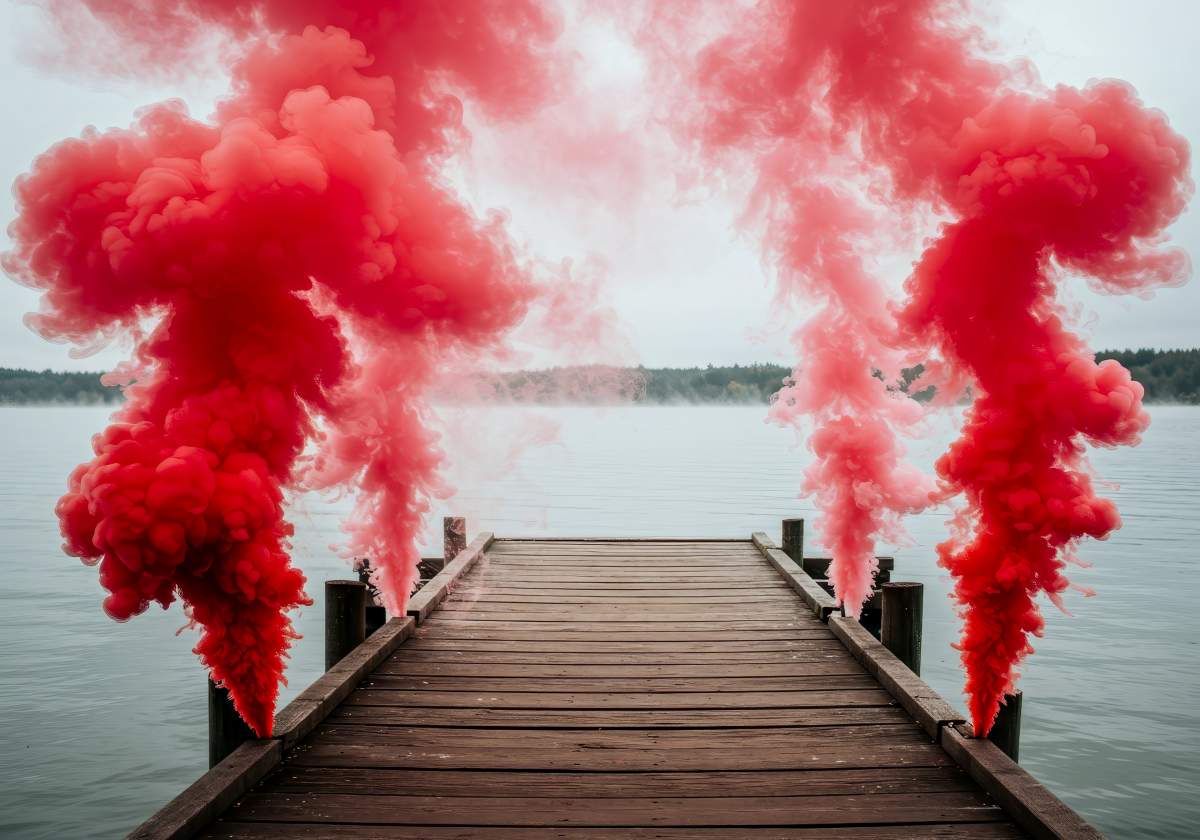
Visual ambition should never take priority over the safety of the cast and crew. Smoke bombs are pyrotechnic products, not ordinary props, and the precise precautions required depend on the product being used. Many consumer smoke bombs are designed for outdoor use only and must not be activated inside a studio, warehouse or other enclosed space.
Before filming, check the manufacturer’s instructions and establish a clear risk assessment. Confirm that the location permits the effect, obtain any necessary permissions and ensure that everyone involved understands the agreed procedure. Where a production requires more complex effects, a suitably qualified special-effects professional can assess whether the proposed approach is appropriate.
Key considerations include:
- Ventilation and exposure: Keep people out of dense smoke and avoid directing plumes towards performers, crew or members of the public. Smoke can irritate the eyes and respiratory system, even when a product is marketed for visual effects.
- Fire risks: Keep effects away from dry vegetation, combustible materials, fuel and other potential ignition hazards. Have suitable fire-safety arrangements in place.
- Staining and clean-up: Coloured smoke can mark clothing, surfaces and nearby materials. Protect costumes and the location, particularly when filming around pale fabrics or rented property.
- Distance and handling: Follow the product’s specified safety distances and handling instructions. Never improvise a placement or attempt to stop an activated device manually.
- Changing conditions: Wind can carry smoke into roads, neighbouring properties or areas used by other people. Pause filming if conditions make the planned effect unsafe.
Good planning is particularly important when a shoot involves dancers, fast movement or elaborate costumes. Anyone wearing loose fabric should be kept well away from the device and its discharge, and the production should have a clear stop procedure if the smoke travels unexpectedly. More advice on using smoke bombs safely can help creators understand the precautions involved before planning a shoot.
Popular Colours Used in Recent Music Videos
There is no single colour palette that defines modern music videos. The most effective choice depends on the artist’s identity, the track’s mood and the visual environment.
- Red and orange create a bold, high-energy look. They can suit dramatic performances, powerful choruses or scenes built around warm lighting. These colours may also be visually intense, so they need to work with the rest of the frame rather than overwhelm it.
- Blue and purple often lend themselves to atmospheric imagery. Against a darker background, they can help create a dreamlike, futuristic or introspective mood. Purple can also feel surreal, particularly when paired with unusual lighting or an urban setting.
- Green and yellow can bring freshness, contrast and a playful quality to outdoor scenes. Their appearance changes considerably with the surroundings, however, so a camera test is worthwhile before committing to a particular location.
- White smoke offers a more understated option. It can create texture and separation without introducing another strong colour, making it useful when the artist’s wardrobe, lighting or set design already provides the main visual interest.
The wider smoke bomb photography trend has influenced the way creators experiment with these effects, particularly in short-form video and behind-the-scenes content. But the best results rarely come from copying a popular colour combination exactly. A distinctive palette that fits the artist and the music will usually feel more convincing.
Recreating the Look for Your Own Content
You do not need a large production crew to experiment with smoke effects, but you do need a clear idea of what you want to capture. Start with a simple concept: a performer walking through a coloured plume, a static portrait with smoke drifting behind the subject or a wide landscape shot where the colour becomes part of the composition.
Choose an open, permitted location and check the weather before setting a date. A light breeze can help smoke move through the frame, while strong or changeable winds make it harder to predict the effect. Avoid locations where smoke could affect traffic, disturb other people or drift towards animals.
Keep the shot list manageable. Decide where the subject will stand, where the camera will be positioned and what the finished frame should look like. If you are working alone or with a small team, prioritise a few well-planned shots rather than trying to capture every possible angle.
There are many creative uses for smoke bombs beyond music videos, from stylised portraits to dramatic outdoor footage. Whatever the idea, remember that smoke effects are only one part of the finished image. Composition, lighting, movement and editing all contribute to the result.
Discover Anfield Fireworks’ Smoke Bomb Range
The right effect begins with choosing a product that suits the creative brief and the conditions in which it will be used. At Anfield Fireworks, our range of flares and smoke bombs offers options for people exploring colourful visual effects, including creators planning photography or outdoor video projects.
Before choosing a product, consider the colour you want, the effect’s stated duration, its activation method and the space available. Always check the individual product information rather than assuming that every option is suitable for filming. In particular, consumer smoke bombs intended for outdoor use should not be treated as alternatives to professional effects designed for controlled indoor productions.
A little research before the shoot can save time on the day and help you choose an effect that complements the footage you have in mind. With the right preparation, coloured smoke can add atmosphere and movement without distracting from the music or the performer.
FAQs
Can smoke bombs be used in music videos?
They can be used in suitable productions when the product, location and conditions permit it. Check the manufacturer’s instructions, obtain permission for the location and complete an appropriate risk assessment before filming.
How long do smoke bombs last on camera?
Duration varies by product, so check its specifications before planning the shot. Remember that the visible plume may take time to build and disperse, meaning the useful filming window can differ from the stated operating duration.
Which smoke colour is best for filming?
There is no universal best colour. Consider the background, lighting, wardrobe and mood of the video, then test the combination where possible to make sure the smoke remains visible.
Can smoke bombs be used indoors?
Many consumer smoke bombs are for outdoor use only and must not be used indoors. Indoor productions should use effects specifically designed and approved for that environment, with appropriate professional oversight.
Do smoke bombs stain clothing?
They can. Coloured smoke may leave marks on clothing and nearby surfaces, so keep it away from valuable costumes and pale materials, and follow the product’s handling guidance.

