



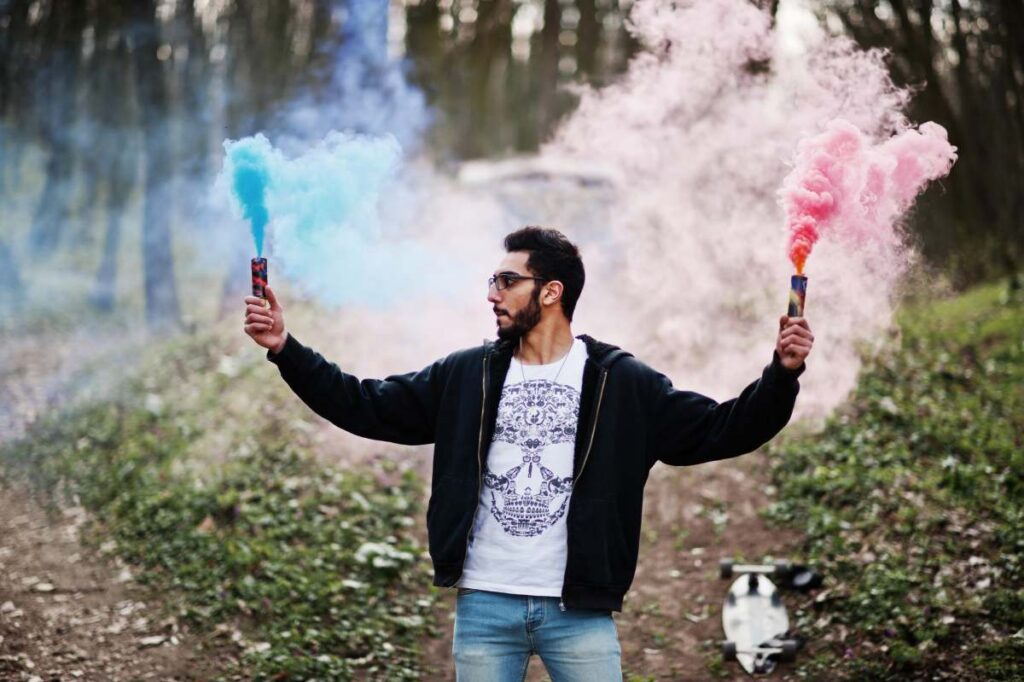
Smoke bombs have become a staple for everything from high-concept fashion photography to dramatic gender reveals, but because they sit in a bit of a “grey area” between special effects and fireworks, people often underestimate the prep work required. Unlike a standard rocket that you light and run away from, smoke bombs are often used in close proximity to people, expensive clothing, and delicate venues.
If you’re sourcing event smoke effects supplies, the first thing to understand is that not all smoke is created equal. While they are officially classified as Category F1 pyrotechnics in the UK – meaning they are low-hazard – they still involve a chemical reaction that produces heat, sparks, and potentially staining dyes. Safety isn’t just about avoiding a fire; it’s about protecting your gear and your reputation with the venue.
Understanding the “Cool Burn” Label
In the world of smoke effects, “cool burn” is a term you’ll see frequently, but it’s often misunderstood. It doesn’t mean the canister stays cold; it means there is no external flame produced during the reaction. The casing itself will still get noticeably warm, and the area where the smoke exits can become hot enough to cause a minor burn if you aren’t careful.
Industry standards like the Enola Gaye WP40 are built for this, but even then, I always recommend holding them at the very base or using a pair of lightweight gloves. If a smoke bomb isn’t explicitly labeled as “hand-held,” it must be placed on a flat, non-flammable surface like a paving slab or a metal tray before ignition.
P.S. – if you’re asking yourself “what are smoke bomb fireworks?” check out our article explaining everything over on our blog.
The Risk of Staining and Sparks
One of the most common “disasters” with smoke bombs isn’t a fire, but a ruined wedding dress or a stained patio. The vibrant colours come from condensed dyes, and if you hold the canister too close to fabric – especially white or silk – the concentrated “wet” smoke can leave permanent marks. A good rule of thumb is to keep the smoke at least 2–3 feet away from any clothing.
There’s also the issue of “spitting.” When you first pull the wire or light the fuse, a few tiny sparks often fly out of the vent. These are usually harmless in an open field, but if they land on a synthetic dress or dry grass, they can cause small singe marks. Always ignite the device pointing away from your body and your audience, and give it a second to “settle” into a smooth smoke stream before you start moving it around for the camera.
Choosing the Right Ignition: Wire Pull vs. Fuse
For events and photography, the “Wire Pull” mechanism has almost entirely replaced the old-fashioned fuse. It’s far more professional because it allows for precise timing – you pull the ring, and the smoke starts almost instantly. It also eliminates the need for lighters or matches, which can be a safety hazard in themselves if there’s a breeze or if people are in high-pressure situations like a wedding ceremony.
With a wire pull, the technique is key: you pull the ring sharply to the side, not straight up. Pulling upward can sometimes cause the internal igniter to fail or even pull the cap off entirely. If you’re using the older fuse-style smoke bombs, make sure you have a reliable “portfire” or a windproof lighter, and ensure the person lighting it is sober and focused on the task at hand.
Venue Permission and Public Space
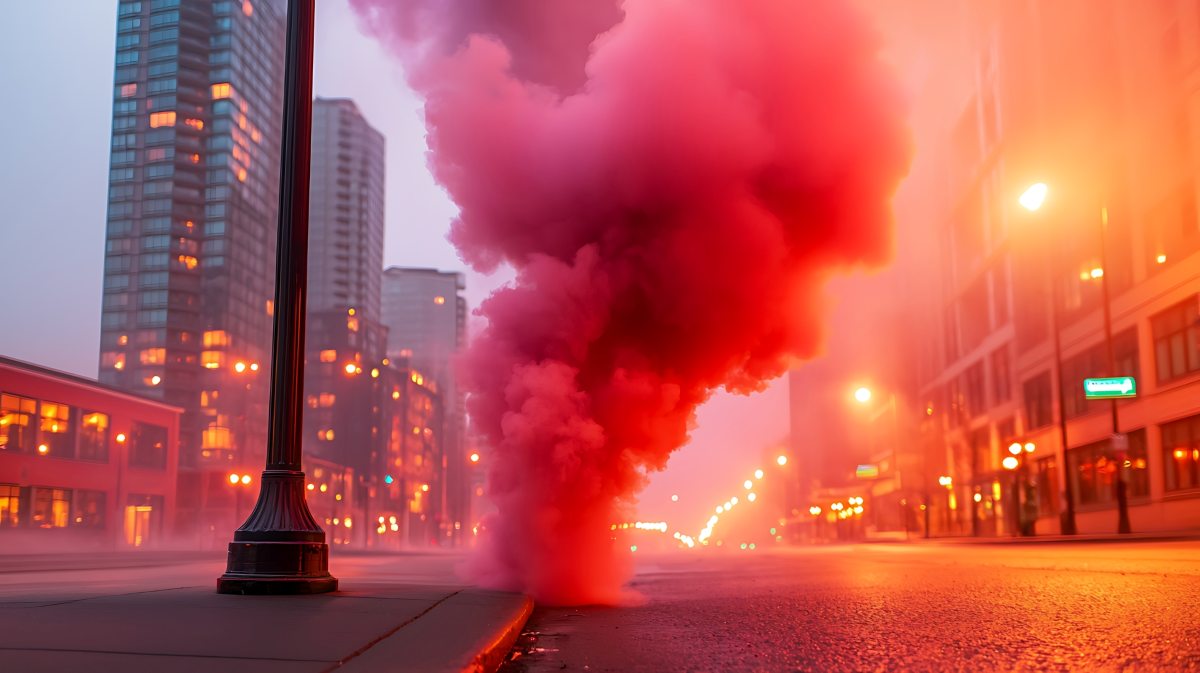
Just because smoke bombs are legal to buy doesn’t mean you can use them anywhere. Most private venues, especially historic manor houses or barn conversions, are incredibly wary of pyrotechnics. Always get written permission from the venue manager before you pack them in your kit. They may designate a specific “safe zone” away from the buildings where you’re allowed to use them.
Using smoke bombs in public places – like a busy city centre or a public park – is a much trickier legal area. While not strictly illegal on private land, using them in a way that causes “alarm or distress” to the public can lead to a police intervention. Large clouds of coloured smoke can be mistaken for a fire or a chemical leak, so it’s always best to keep your shoot tucked away from public view or notify the local authorities if you’re doing something large-scale
The “Post-Smoke” Disposal Plan
A smoke bomb is at its most dangerous once it has finished emitting smoke. The metal or cardboard canister will be at its peak temperature, and it can stay hot for ten to fifteen minutes. You should never just toss a spent smoke bomb into a standard rubbish bin or leave it on dry grass.
The professional way to handle this is to have a “dunk bucket” – a metal bucket filled with water. Once the canister is spent, drop it into the water and leave it there to fully submerge and cool down. This ensures that any remaining embers are extinguished and the casing is safe to handle. Once they are cold and soaked through, they can be disposed of in regular waste, but skipping this step is a major fire risk.
Weather and Wind Considerations
Wind is the ultimate enemy of the smoke bomb. If you have anything more than a gentle breeze, your beautiful thick cloud will turn into a thin, wispy streak that disappears before the photographer can even click the shutter. Before you ignite, take a second to watch which way the wind is blowing.
Position your subjects so the wind carries the smoke away from their faces. Nobody looks good in a photo when they’re squinting through a cloud of blue dye or coughing because they’ve inhaled a lungful of smoke. If the wind is too high, it’s better to save the smoke bombs for another day; forcing the shot usually results in poor photos and a lot of frustrated people.
FAQs
Is the smoke toxic to breathe in?
Modern smoke bombs from reputable brands are generally non-toxic, but you still shouldn’t inhale the smoke directly. It can be irritating to the throat and lungs, especially for people with asthma. Always use them in well-ventilated outdoor areas.
How long does a typical smoke bomb last?
A standard “WP40” size canister typically lasts between 60 and 90 seconds. There are “Micro” versions that last about 30 seconds and “Cloud Makers” that can go for up to 3 minutes. Always check the burn time on the label so your photographer knows how long they have to get the shot.
Can I use smoke bombs indoors?
No. Even “cool burn” smoke bombs produce a massive volume of smoke that will quickly overwhelm an indoor space, trigger fire alarms, and potentially cause respiratory distress. They are strictly for outdoor use only.

