



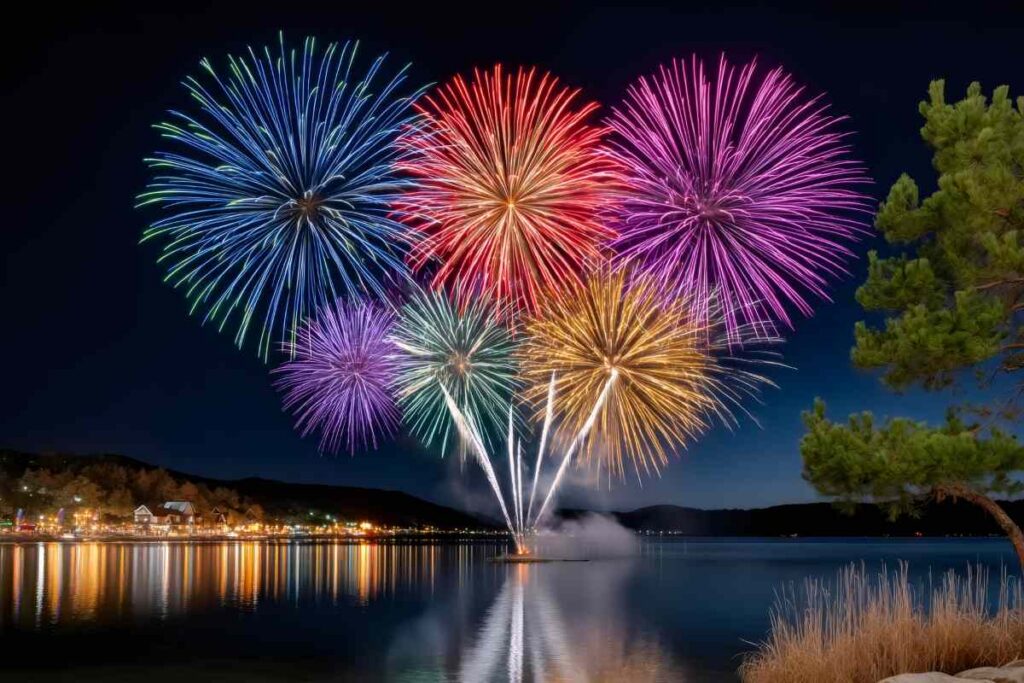
Summer evenings in the UK have a very specific quality. The “golden hour” seems to stretch on forever, and even after the sun has technically dipped below the horizon, the sky retains a deep, inky indigo rather than the pitch black of a November night. This ambient light changes the way we perceive pyrotechnics; a firework that looks spectacular in the winter might feel a bit washed out against a summer twilight.
When you’re choosing your display from a reliable pyrotechnics supplier, you need to think about contrast. You aren’t just fighting darkness; you’re competing with the remaining blue light in the atmosphere. To make your garden party or wedding truly pop, you want to lean into colours that feel “vibrant” and “warm,” rather than the cold silvers and whites that dominate New Year’s Eve.
The Magic of Sunset Hues
The best summer displays often mimic the colours of the sunset itself. Think rich oranges, deep reds, and vibrant yellows. These “warm” colours have a longer wavelength, which means they tend to appear more solid and saturated against a sky that isn’t quite dark yet. When you look at how firework colours are created, it’s fascinating to see that these fiery tones come from elements like strontium (red) and calcium (orange).
Using a palette of “citrus” tones – lemons, limes, and tangerines – is a massive trend for 2026. These colours feel energetic and fresh, perfectly matching the vibe of a summer barbecue or a midsummer festival. They cut through the twilight glow much more effectively than paler shades, ensuring that your guests aren’t squinting to see the effects.
The Challenge of Summer Blues
Blue is notoriously the hardest colour to produce in pyrotechnics. It requires a very specific burning temperature; if the firework is too hot, the blue washes out into a pale white, but if it’s too cool, it won’t be bright enough to see. In the summer, blue fireworks can be particularly tricky because they can “blend” into the blue of the evening sky.
However, if you get a high-quality “Electric Blue” or “Deep Sea Cyan,” the effect is stunning. The trick is to pair these blues with a contrasting “strobe” or “glitter” effect in gold or white. This creates a visual separation that helps the blue stand out. It feels sophisticated and cooling, providing a nice counterpoint to the heat of a July day.
Neon and Tropical Palettes

One of the most exciting shifts in modern fireworks is the move toward “neon” colours. We’re seeing more vivid pinks, purples, and “aqua” greens that look like they’ve been pulled straight from a tropical beach party. These colours are achieved by mixing different metal salts – like combining copper and strontium to get a piercing purple.
These tropical tones are perfect for summer because they feel “intentional” and modern. They move away from the traditional red-white-blue patriotic palette and toward something more artistic and festive. A barrage that fires alternating shots of neon pink and lemon yellow creates a high-energy “festival” atmosphere that’s hard to beat.
Gold and “Brocade” Effects
While I mentioned avoiding too much silver, gold is a different story entirely. Gold “brocade” or “willow” effects – where the stars hang in the air and slowly drift downwards like weeping willow branches – look incredible in the summer. The gold has a warmth that complements the summer air, and it holds its colour beautifully as the light fades.
I find that using gold as a “base” for your display allows the other colours to shine. You might have a gold fountain at ground level while vibrant green and red rockets burst overhead. It adds a touch of “quiet luxury” to the proceedings, making a backyard show feel a lot more expensive than it actually was.
Green: The Summer Workhorse
Green is often the brightest colour in any firework display because the human eye is naturally very sensitive to green light. In the summer, when we’re surrounded by green trees and lawns, there’s a nice thematic harmony to using green pyrotechnics. Barium compounds are responsible for these emerald bursts, and they are incredibly reliable.
A “Lime Green” or “Forest Green” burst is almost always guaranteed to be visible, even if there’s still quite a bit of light in the sky. It’s a great “safe” bet if you’re starting your display a little earlier than planned while the kids are still awake. It provides a punchy, high-visibility start to the show that grabs everyone’s attention immediately.
Layering for Maximum Impact
The most successful summer displays don’t just rely on one colour; they layer them to create depth. Because the sky is lighter, “single-shot” fireworks can sometimes feel a bit lonely. Instead, look for barrages that offer “multi-level” effects – perhaps a crackling mine at the bottom with a colourful peony burst on top.
This fills the vertical space and creates more “ink” on the sky’s canvas. By mixing “warm” tones with “neon” accents, you create a visual complexity that keeps the audience engaged. Summer is all about abundance and vibrance, and your firework choices should reflect that same energy.
FAQs
Why do some fireworks look “faded” in the summer?
This is usually because the show started too early. If there is still significant “ambient light” (blue light) in the sky, it can wash out the more delicate colours like blue and purple. For the best results, wait until at least 45 minutes after sunset.
What is the best colour for a summer wedding finale?
Gold is a classic choice for weddings because it looks elegant and “expensive.” However, adding a few “Neon Pink” or “Electric Blue” rockets into the final volley can give it a modern, celebratory twist that looks great in professional photos.
Are there “daytime” fireworks I can use in the summer?
Yes! If you want to celebrate while the sun is still up, look for “smoke bombs” or “daytime parachutes.” These use vibrant coloured smoke rather than light, making them perfect for gender reveals or garden parties before it gets dark.

