




Fireworks are designed to impress, and one of the most common questions people ask when watching a display is surprisingly simple: how high do fireworks actually go?
When a rocket or shell bursts high above the ground, it can feel almost limitless, as if it disappears into the night sky itself. In reality, fireworks follow very precise rules of physics, safety, and design that determine exactly how high they can travel.
In this article, we’ll explore the heights different fireworks reach, what affects their altitude, and why some displays seem to fill the entire sky while others stay closer to the ground.
Why Firework Height Matters
The height of a firework isn’t just for visual drama. Although they are fun to watch, the height that fireworks reach actually plays a crucial role in safety and display design.
Fireworks need to explode high enough to be seen clearly and safely from a distance, but not so high that their effects become too small or lose impact. The balance between altitude, burst size, and viewing distance is carefully engineered.
Different types of fireworks are designed for different environments. Garden displays, for example, use lower-altitude fireworks, while large public events use shells that can reach significant heights to create wide, expansive visuals.
Typical Heights of Fireworks
Most consumer fireworks fall within a fairly predictable range of heights, depending on their type and size.
Here’s a general breakdown:
- Sparklers and ground effects: 0-1 metre (no aerial lift)
- Fountains and cakes (lower effect range): 1-10 metres
- Small rockets: 30-60 metres
- Mid-range aerial fireworks: 60-120 metres
- Large professional shells: 150-300+ metres
At the upper end, professional display shells can reach heights comparable to skyscrapers. These are typically reserved for large public events due to the space and safety distances required.
What Determines How High Fireworks Go?
Several factors influence how high a firework will travel before it bursts.
1. The Amount of Lift Charge
Inside every aerial firework is a lift charge, which is a small explosive charge that propels the firework into the air. The more powerful the lift charge, the higher the firework will travel.
This is carefully measured and regulated to ensure the firework reaches its intended altitude safely and consistently.
2. Shell Size and Weight
Heavier fireworks require more energy to reach higher altitudes. Larger shells typically contain more explosive material and produce bigger bursts, which is why they are launched from greater heights.
This allows the effects to spread out properly in the sky without posing a risk to spectators on the ground.
3. Safety Distance Requirements
Safety regulations also play a major role in determining firework height. Fireworks must be designed so that they explode at a safe distance from spectators.
This is why professional displays use large open spaces, while garden fireworks are designed to operate within much smaller areas.
Understanding how aerial firework shells reach impressive heights helps explain why these safety distances are so important in controlling both altitude and burst size.
Why Bigger Fireworks Go Higher
There is a direct relationship between firework size and altitude. Larger fireworks are not only more powerful, but they also need more space to fully open up in the sky.
If a large firework were to explode too low, the effects would be cramped and potentially unsafe. By launching higher, the firework has room to spread out, creating a wide and visually impressive display.
This is why professional shows often feel so expansive; because multiple high-altitude shells are designed to fill large sections of the sky simultaneously.
Consumer vs Professional Fireworks
One of the biggest differences in firework height comes down to whether the firework is designed for consumer or professional use.
Consumer Fireworks
These are the fireworks most people use in gardens or private displays. They are designed with strict safety limits and typically reach moderate heights.
Examples include:
- Small rockets
- Garden cakes
- Low-noise effects
- Fountains and barrages
These fireworks are designed to be used safely within residential areas, with controlled burst heights and predictable trajectories.
Professional Fireworks
Professional displays use larger, more powerful shells that require trained operators and licensed sites.
These fireworks:
- Reach much higher altitudes
- Produce larger, more complex bursts
- Require significant safety distances
- Are often fired using computer-controlled systems
Because of their scale, they are not available for general public use.
How Fireworks Stay on Course
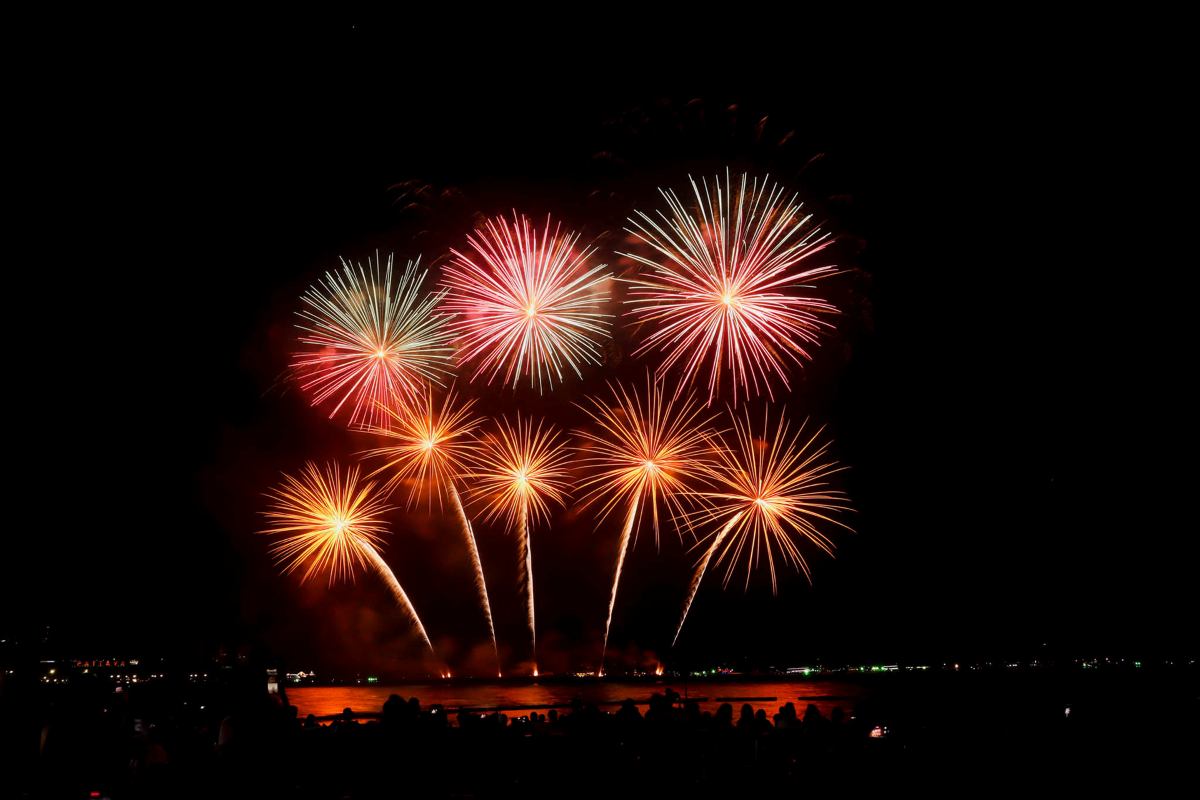
It might seem like fireworks randomly shoot into the sky, but their flight path is carefully controlled.
Most aerial fireworks are launched from tubes called mortars. When the lift charge ignites, it propels the shell straight upward. The design of the mortar ensures the firework follows a stable vertical path.
Once the firework reaches its peak height, a timed fuse triggers the explosion, creating the visual effect.
Wind conditions can have a small effect on trajectory, but well-designed fireworks are engineered to remain stable even in light breezes.
Why Fireworks Don’t Go Infinitely High
There’s a common misconception that fireworks could be made to go as high as desired. In reality, there are several practical limits.
1. Gravity
No matter how powerful the lift charge, gravity constantly works against the firework, pulling it back down.
2. Safety Regulations
Fireworks are strictly controlled to ensure they explode within safe distances of spectators, buildings, and infrastructure.
3. Visibility
If fireworks go too high, their effects become difficult to see clearly from the ground. Designers aim for a balance between height and visual impact.
4. Cost and Practicality
Larger, higher-reaching fireworks require more materials and more complex design, making them more expensive and less practical for everyday use.
The Science Behind the Height
Firework height is essentially a controlled application of physics. The lift charge provides upward force, overcoming gravity until the shell reaches its peak point.
At that moment, the upward velocity slows to zero before the shell begins to descend. The timed fuse ensures the explosion happens precisely at the intended height.
This careful timing is what allows fireworks to create symmetrical, evenly distributed bursts in the sky.
How Height Affects the Viewing Experience
The height of a firework directly impacts how it is experienced by the audience.
Lower fireworks:
- Feel more intimate
- Are ideal for smaller spaces
- Emphasise detail and texture
Higher fireworks:
- Create a sense of scale and spectacle
- Are visible from greater distances
- Allow for larger, more dramatic bursts
A well-designed display often combines multiple heights to create depth and variety in the sky.
Choosing Fireworks for Your Event
When planning a display, understanding firework height helps you choose the right products for your space and audience.
For example:
- Smaller gardens benefit from low to mid-height fireworks
- Larger outdoor areas can accommodate taller aerial effects
- Public or large private events may incorporate professional-level designs
When choosing between fireworks supplies for parties and events, it’s important to consider both the available space and the viewing distance to ensure a safe and enjoyable display. Our team at Anfield Fireworks can help guide you towards suitable options depending on the scale of your celebration and the type of effects you’re aiming for.
The Role of Design in Modern Fireworks
Modern fireworks are carefully engineered not just for height, but for timing, colour, and symmetry.
Manufacturers use precise measurements to ensure that each firework reaches the correct altitude before bursting into its intended pattern. This level of control allows for increasingly complex displays that are both safe and visually stunning.
Safety and Firework Height
Height is closely linked to safety in fireworks design. The higher a firework travels, the more space is required for it to burst safely.
This is why safety distances are always specified on packaging. These distances ensure that even if something behaves unexpectedly, spectators remain protected.
Following manufacturer instructions is essential for safe use, especially when dealing with aerial fireworks.
Bringing It All Together
Fireworks may look effortless when they light up the night sky, but behind every burst is a carefully controlled system of physics, engineering, and safety design.
From small garden rockets to large professional shells, each firework is designed to reach a specific height for a specific purpose. That height determines not only how the firework looks, but how it is experienced.
Reaching for the Sky
So, how high do fireworks go? The answer depends on their size, design, and purpose. However, most range from just a few metres above the ground to several hundred metres in the case of professional displays.
What remains consistent is the careful balance between spectacle and safety. Fireworks are designed to rise just high enough to create breathtaking effects while staying within controlled and safe limits.
Understanding how firework height works adds a new layer of appreciation to every display. Behind each burst in the sky is a precise combination of science, engineering, and creativity, which all work together to light up the night.

