



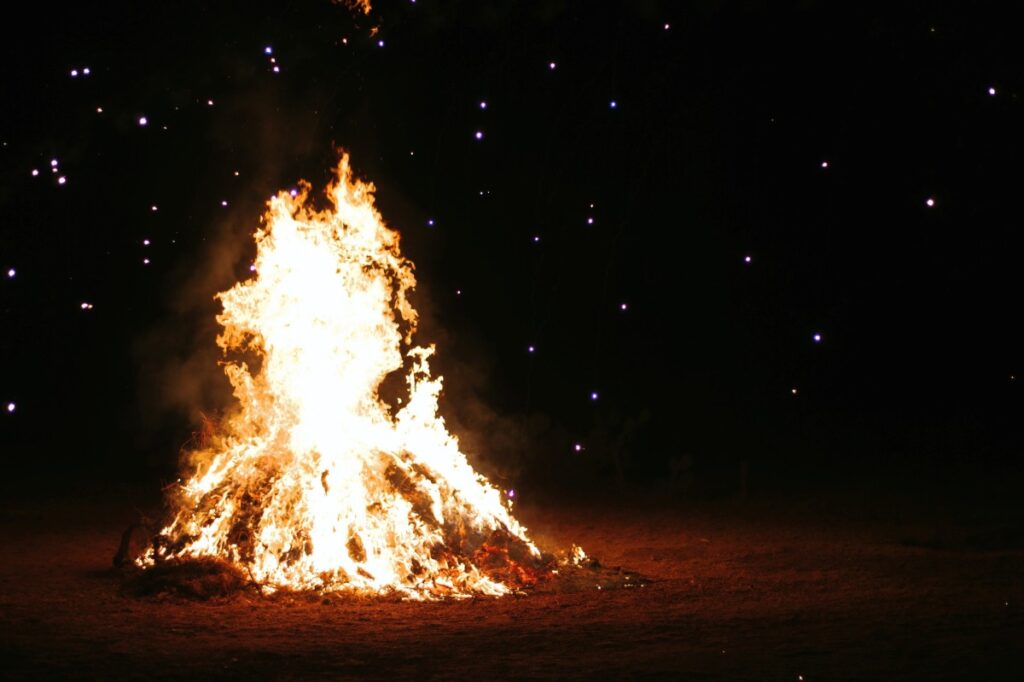
Bonfire Night is one of those traditions that sneaks up on us each year. One minute we’re sweeping up the last of autumn leaves, the next we’re standing in a muddy field, craning our necks towards the sky, waiting for the first crack of colour. It’s undeniably exciting, even a little magical, but it’s also undeniably… smoky. And noisy. And, well, not exactly a gift to the planet. Which begs the question: can we still enjoy Guy Fawkes Night without leaving behind quite such a messy footprint? We think so. Possibly. Let’s dig in.
What’s the Environmental Impact of Bonfire Night?
The obvious culprit is the bonfire itself. A towering stack of wood and scrap set alight may look atmospheric, but all that carbon dioxide, particulates, and sometimes even toxic chemicals (depending on what people throw on the pile) rise straight into the atmosphere. Add fireworks into the mix – chemical-heavy bursts designed to dazzle and boom – and you’ve got a cocktail of air pollution, noise disruption, and leftover debris.
But it’s not just the smoke. There’s also the wildlife angle. Hedgehogs, for instance, have an unfortunate tendency to crawl into unlit wood piles for shelter, which makes bonfire night more dangerous than festive for them. Birds and pets get rattled too – startling noises, bright flashes, sudden bangs. Not quite the community fun they signed up for.
Are There Greener Fireworks?
Here’s where it gets tricky. Fireworks, by design, rely on chemical reactions to produce those jaw-dropping effects. That said, some manufacturers have been experimenting with alternatives – formulations that use cleaner-burning propellants, or fireworks with less plastic packaging and biodegradable casings. They’re not perfect, but they’re a start.
We’d also suggest thinking about scale over spectacle. A few well-chosen, high-quality fireworks can be more impactful than a long barrage of mediocre ones. It’s a bit like fine dining versus an all-you-can-eat buffet: sometimes less really is more. For example, if you’re looking at choosing the best fireworks for bonfire night, go for those that deliver impressive effects without the need for constant repetition.
And if fireworks feel non-negotiable, perhaps balance things out – organise a community event instead of multiple small private displays. Fewer launches overall, more people enjoying them. Win-win.
Could We Replace Fireworks Altogether?
It’s controversial, but the idea of phasing out fireworks altogether has been floated more often in recent years. Alternatives like drones or laser light shows are cropping up at big city events. Do they have the same visceral crack and sparkle? Not really. But they also don’t leave the same smoky haze or frightened pets cowering under the sofa.
At smaller gatherings, you could consider less polluting add-ons: sparklers (still not harmless, but lighter on impact), lanterns (though please, not the sky kind that drift and endanger wildlife), or high-visibility smoke bombs for any events that create dramatic, colourful plumes without the explosions. They don’t offer the same tradition-heavy punch as fireworks, but they can still make a backyard display feel lively.
What About the Bonfire Itself?
This one is more manageable. If you’re going to have a bonfire, build it responsibly. Only use clean, dry wood – avoid painted or treated timber, which can release nasty fumes. Check thoroughly for wildlife before lighting. And perhaps keep the scale smaller than you think you need; a modest fire can still bring people together without belching out unnecessary smoke.
Alternatively, some communities now opt for symbolic “bonfires” – art installations with LED flames, or even fire pits where the blaze is contained and more controlled. A shift away from giant infernos doesn’t mean losing the atmosphere; it just means tweaking the tradition.
Managing Waste and Leftovers

Let’s be honest, the aftermath of Bonfire Night can look grim: soggy firework casings scattered on grass, half-burnt wood smouldering, food packaging left behind. One way to cut this down is simple planning. Bring reusable cups and flasks, choose snacks with minimal packaging, and set up bins (properly labelled) near the event. It sounds obvious, but it’s often overlooked.
On the fireworks front, clean-up matters. Collect debris as soon as possible the next day. Wet down any spent fireworks before disposing of them, and recycle cardboard where you can. It’s not glamorous, but it’s the sort of detail that adds up when communities act responsibly together.
Can Bonfire Night Still Feel Special Without the Excess?
Absolutely. In fact, part of what makes traditions last is their ability to evolve. We don’t celebrate Bonfire Night the same way people did in the 1600s, after all. Maybe the future version will focus more on community gatherings, shared food, music, and scaled-back but still meaningful displays. The glow of a fire, even a small one, combined with the fizz of a sparkler, is often enough to capture that seasonal magic.
It’s less about the biggest bang and more about the memory of being there – cold hands wrapped around a warm drink, a shared laugh when someone’s hat nearly blows off, a moment of wonder when the sky lights up, however briefly.
Final Thoughts on Greener Celebrations
We’re not here to wag fingers or cancel fun. Bonfire Night is embedded in British culture, and we don’t think it’s going anywhere. But we do think we have choices – small ones, like opting for cleaner fuels or recycling, and bigger ones, like supporting eco-friendlier fireworks or even trying alternatives altogether.
Maybe the point isn’t perfection but progress. If each year gets a little greener, a little less damaging, and still retains its sparkle, then we’re on the right track. After all, what’s more fitting than marking Bonfire Night not just with flames and fireworks, but with a renewed sense of care for the world around us?

